
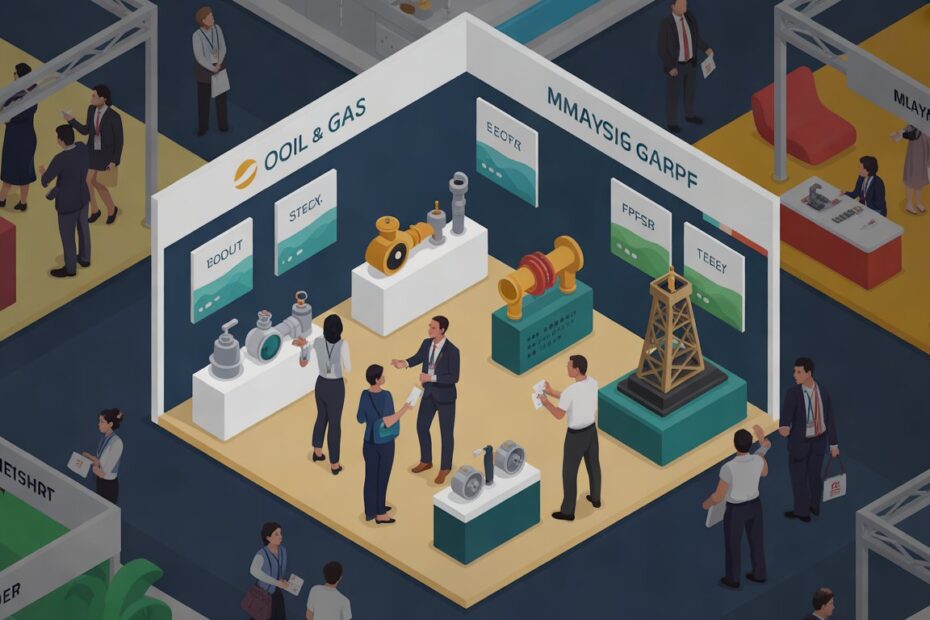
What an Oil and Gas Booth Is and Why It Matters
An oil and gas booth is a dedicated exhibition space used to present your company, services, technologies, or project capabilities to industry stakeholders. In a sector where trust, technical credibility, and operational safety matter a lot, your booth is more than just a display area. It is often the first place where you show what your business stands for, how you solve problems, and why people should take your team seriously.
You may use an oil and gas booth at trade shows, energy conferences, recruitment events, supplier meetings, or regional industry expos. Done well, it helps you attract the right visitors, start meaningful business conversations, and support lead generation. Done badly, it can make even a strong brand look unprepared or outdated.
From a pros and cons point of view, the booth is both an opportunity and a responsibility. It can create strong visibility, but it also demands careful planning, professional design, and a clear message. If you want to improve your approach, you need to understand what the booth should achieve before you think about graphics or furniture. Related source: oil and gas exhibition design.
Key Advantages of Using an Oil and Gas Booth
The biggest strength of an oil and gas booth is that it gives you a physical platform to communicate value face-to-face. In a technical industry, people often want to see proof, ask detailed questions, and judge your competence in person. A well-built booth makes that interaction easier and more effective.
Another major advantage is visibility. At a busy exhibition, you are competing with many companies for attention. A booth that is clear, well-branded, and professionally organised can help you stand out quickly. It also helps visitors remember your company after the event, especially if you present your message in a simple and consistent way.
You can also use the booth to support multiple business goals at once. It can help you generate sales leads, strengthen relationships with existing clients, introduce new technologies, and improve brand recognition. For companies in oil and gas, where long sales cycles are common, these face-to-face touchpoints can be especially valuable.
There is also a credibility benefit. When your booth looks polished and your staff can explain technical matters clearly, you send a strong signal that your organisation is reliable and serious. That impression can be just as important as the actual product demonstration.
Common Challenges and Limitations
Even with good planning, an oil and gas booth has its limitations. One of the most obvious is cost. Exhibition space, booth construction, logistics, staffing, travel, and promotional materials can add up quickly. If you do not plan carefully, the total expense may become difficult to justify.
There is also a risk of weak engagement. A booth may look impressive from a distance, but if your team is passive, your messaging is unclear, or your value proposition is too generic, visitors may walk past without stopping. In other words, design alone will not save poor execution.
Another challenge is technical complexity. Oil and gas buyers usually expect accurate information, and they may ask detailed questions about compliance, safety, performance, or integration. If your booth staff are not properly trained, they may struggle to answer confidently. That can damage trust faster than a simple visual mistake.
Logistics can also be a headache. Large equipment samples, heavy display structures, energy regulations, venue rules, and tight setup timelines can create operational stress. For that reason, the booth works best when you treat it as a project that needs coordination, not as a last-minute marketing task. Related source: Upstage Expo.
How to Design an Oil and Gas Booth That Works
If you want your oil and gas booth to perform well, start with your goals. Decide whether you are focused on brand awareness, lead generation, product education, recruitment, or partner meetings. When you know the main purpose, you can design the booth around visitor behaviour rather than decorating it randomly.
Next, keep the messaging direct and relevant. Your booth should immediately tell visitors who you are, what you do, and why it matters in the industry. Use short headlines, clear visuals, and a layout that guides people naturally through the space. In many cases, less clutter gives a stronger professional impression than trying to show everything at once.
Functionality matters as much as appearance. Make sure there is enough room for conversation, product demonstration, and storage. If visitors need to stand awkwardly in a crowded area, the experience becomes less inviting. Comfort, accessibility, and traffic flow are practical design issues that can strongly affect results.
You should also think about staff readiness. The best-designed booth still depends on the people inside it. Train your team to greet visitors properly, qualify leads, explain technical details in simple terms, and follow up efficiently after the event. A professional booth experience is usually the result of both design and behaviour working together.
Best Practices to Maximise Return on Your Booth Investment
To get better value from your oil and gas booth, treat it like a business tool rather than a one-off display. Start by defining success metrics before the event, such as the number of qualified leads, meetings booked, product demonstrations completed, or target accounts engaged. When you measure outcomes, you can judge whether the booth was worth the investment.
It also helps to prepare for the event early. Pre-book meetings with important prospects, promote your presence through your usual channels, and make sure your booth team knows the event schedule and objectives. This reduces wasted time and increases the chance that the right people will visit your stand.
During the event, keep your booth active. Use live demos, visual materials, or conversation points that encourage visitors to stop and stay. Avoid overloading the space with too much text or too many props. In a busy exhibition hall, clear communication usually performs better than complicated displays.
After the event, follow up quickly. A strong booth can create interest, but timely follow-up is what turns interest into business. Organise your leads, record important discussion points, and continue the conversation while the event is still fresh in the visitor’s mind. If you review what worked and what did not, you will improve the next booth even further.